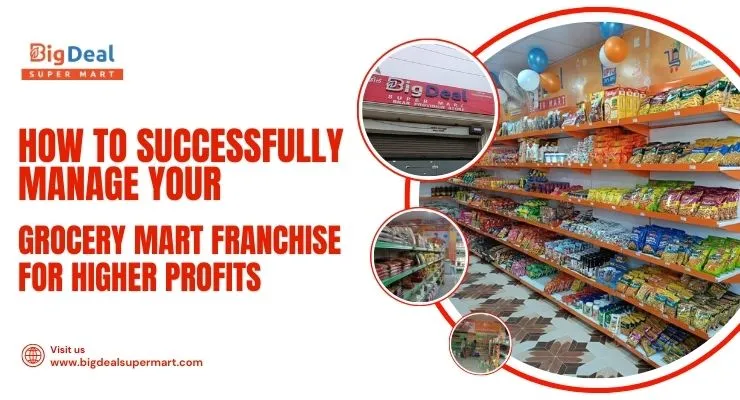
How to Choose the Perfect Location for Your Supermarket
Finding the right location for your supermarket should not be looked at as just setting the foundation.
It is one of the long-term success factors in the organised retail space.
Branding, pricing, and inventory control are all basic elements upon which a retail outlet can succeed; however, if there is a bad location, none of these will hold water.
If your store happens to be inaccessible, invisible, or in the wrong demographic area, the performance of the store will undeniably suffer even if you manage your operations well.
In the fast-developing Indian markets, supermarket franchises continue witnessing growth in Tier 1, 2, and 3 cities. Competition is on the rise as more consumers are demanding.
Hence, this opportunity must be carved by selecting a location that offers high potential in terms of returns, continuous footfall, and brand visibility.
Well, let’s see the considerations that help select an ideal location for your supermarket, mixed with top retail franchise tips for real estate strategy at the ground level.
Understanding Daily Footfall
Demand density is the starting point for deciding on a viable location for your supermarket.
Highlighting the general notion of foot traffic will be misplaced if it lacks the relevance of that traffic.
You want your store to be situated where your potential clientele lives and shops.
A supermarket feels most alive in the middle of some human movements.
This could be near residential apartments, housing societies, school routes, or local markets. Such places produce good walk-ins and are predisposed to build customer loyalty.
You want to cement yourself in your customer’s weekly or daily schedule.
Another great source of information from beyond the data points lies in visiting the site.
Follow the patterns during the weekdays and during peak hours, holidays, or evenings; observe: what people carry in their bags, where they head to after school or work, and what kind of stores do they frequent? Those little details are enough to give you clues about purchasing power, product demand, and how frequently people go shopping.
Also Read: How to Pick the Best Supermarket Franchise for Your City
Ensuring Accessibility and Visibility
For it to be a good location, it has to be visible and accessible. Customers must be able to reach the supermarket on foot, by vehicle, or by public transport.
Customers will also want to enter and exit the store in a matter of minutes, park their two-wheelers or cars, and easily spot the store signage from a distance.
This is more so true for Indian cities with irregular street formations and tormenting traffic.
Properties directly facing wider roads or located on corner plots will garner higher attention.
A branded signboard on a main road also aids a lot in brand recall. Even if it is a small store, it will fare well in a high-visibility corridor with decent footfall.
Accessibility is convenience. Will it be an easy trek for your customers to carry bags or push a cart to the store? Where applicable, ensure there are footpaths, ramps, or safe roadside access.
Such details will surely improve the user’s experience and give them a reason to return.
Using Expert Franchise Support in Site Selection
One primary benefit when entering a supermarket franchise is the availability of professional site selection support.
Franchise brands like BigDeal have specialised teams evaluating the locations for potential stores.
They do this based on various parameters like data modelling, competitor mapping, and projecting financials based on nearby demographics, expected sales, infrastructure readiness, and compliance with franchise format requirements.
This greatly reduces the element of guessing. An average site might perform below average just because there was no access for deliveries or irregular supply of power, or could be situated right in the middle of a buyer’s saturated market.
Site surveys from an experienced retail brand factor in these threats at an early stage and assist franchisees in making an objective evaluation.
Nevertheless, even as an independent store, you should try and follow the structured approach.
Rate your location according to visibility, competition, cost, compliance, and consumer potential.
The more objective your process, the more confident your final decision will be.
Balancing Setup Costs with Expected Returns
A great location for your supermarket is not the one with a fancy rent. Real estate costs can lower your margins very fast.
The store may take some time to scale up sales.
Hence, choose a location where rent or property cost is in line with the realistic working revenue capacity of the store.
Consider your projection of monthly expenses on rent, salaries, utilities, inventory, and technology; average basket size; and expected footfalls per day.
From these, calculate the break-even points and the number of days to reach them.
This way, you ensure deciding on investment, not just on fancybut on realistic grounds.
Use BigDeal Supermart transparent investment norms: ₹ 10–₹ 25L under normal times for store setup, 45 days for launch, to model your financial forecasts.
Time to reach rent, setup cost, break-even period, and margin commitments in assessing each property.
Reviewing the Competitive Environment
Another vital step in choosing the location for your supermarket is knowing your neighbours.
Look at the existing stores in the area: their numbers, sizes, and formats.
Are there large branded supermarkets 300–500 meters away? Or is the area flooded with kirana stores selling an alike mix of products?
Competing in an already saturated market will most likely mean that your store never stands out amongst many others.
Finding a neighbourhood where demand is gathering and little organised retail exists gives you the edge as a first mover, putting you in a strong position to build deep relationships early on with your clients.
Identify how other stores fare: are they crowded? Not well maintained? Are customers queuing up for discounts or buying premium products? This gives you a view of price sensitivity, level of quality expected, and service gaps that you can fill skillfully.
Matching Store Format to the Chosen Location
Going with the location for your supermarket first, your store size and format must adapt to it, not vice versa. In tight urban pockets, a store of 500 to 1200 square feet would do, especially when local competition is scant and daily traffic fairly steady.
In semi-urban or suburban areas, however, bigger formats exceeding the 1200- 1500 square-foot mark would probably show better results because of wider roads and bigger plots that also allow for variety.
Each has its positives and negatives: it is cheaper to run and easier to manage such a small store, but it is limited in product range.
Large formats can cover a good range of SKUs, fresh produce, and household items, but they command a greater investment and consistent footfall.
It is better that you choose a format that can provide a trade-off between convenience, stock availability, and operational efficiency, while the entire site footprint could be used effectively.
Checking Infrastructure and Document Requirements
A well-located store spans beyond geography and extends into infrastructure readiness. Site check for water and electricity supply consistency.
Refrigeration, light, and billing counters essentially require power capacity; air conditioning may need to be supplied as well.
Healthy loading and unloading spaces must be provided for sellers and logistics partners.
Evaluate the internal layout too. Could that give enough space for aisles, checkout counters, cold storage, and security systems? Are there emergency exits and hygiene facilities? Will the structure bear wall shelving or refrigeration?
Most importantly, confirm if the store meets all legal requirements.
Commercial zoning in place, Fire safety certificates, and if licenses are available for this kind of store.
Before launching, all food safety, taxation, and trade approvals must be secured.
This step is neglected in the excitement of finding a location for your supermarket, but it will cause significant delays when it must be addressed later.
Check out this: Smart Investment? Understanding Supermarket Franchise Cost
Conclusion
Most people judge the location for your supermarket to be ideal when it connects the brand to the customers in the most straightforward, sustainable, and profitable manner.
It compares visibility to rent, demand to convenience, or future potential to present-day relevance.
Either way, whether partnered with an existing franchise or running your concept, customers interact with your location every single day.
Make that decision count and don’t rush through it: look at every factor, bring in the necessary business tools, and cherish street-level research.
FAQs
1. What space is the minimum to open up a supermarket?
A supermarket can get started with anywhere from 500-800 sq. ft., depending on location, while one in a suburban area would rather go for 3,000 sq. ft. or above.
2. Should I rent or buy if I am to open a supermarket?
On the other hand, renting gives you lots of flexibility while the upfront cash put into it is low. You should buy if you want to keep the business in the long term. Always consider the risk factors, ROI, and investment to make sure you make a profit.
3. What is more important, foot access or easy vehicle parking?
Both are equally important. Ideally, opt for a site that will create pedestrian footfall and parking nearby so walk-in and drive-in customers can visit your store.
4. How should I know if a location will be profitable even before I start?
A blend of market research, traffic data, competitive analysis, and franchise investment calculators should give you an estimated view of potential performance so you don’t have to commit blindly.